

Plastics
Plastics are a wide range of synthetic or semi-synthetic materials that use polymers as a main ingredient. Their plasticity makes it possible for plastics to be molded, extruded or pressed into solid objects of various shapes. This adaptability, plus a wide range of other properties, such as being lightweight, durable, flexible, nontoxic, and inexpensive to produce, has led to their widespread use. Most plastics are derived from natural gas and petroleum, and a small fraction from renewable materials, such as corn or cotton derivatives.
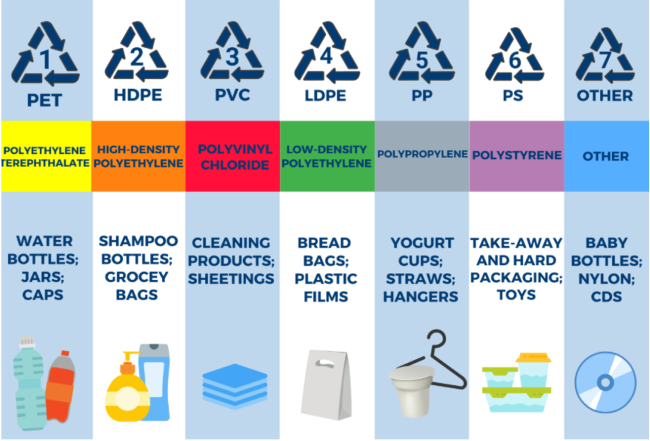
The recycling symbol found on plastic products does not indicate that a product is necessarily recyclable nor recycled. The number is a resin identification code that tells you what kind of plastic that material is made of. Plastics that have #1 (PETE) or #2 (HDPE) are the most commonly recycled plastics. Plastics #3 , #4, #5, #6 and #7 are generally tougher to recycle and are not universally collected in local recycling programs. Some packaging is unavoidable, but we can choose plastic packaging made from material that can be recycled. Below are the 7 most common types of plastics.
1) Polyethylene Terephthalate (PET or PETE)
This is one of the most commonly used plastics. It’s lightweight, strong, typically transparent and is often used in food packaging and fabrics (polyester).
Examples: Beverage bottles, Food bottles/jars (salad dressing, peanut butter, honey, etc.) and polyester clothing or rope.
2) High-Density Polyethylene (HDPE)
Collectively, Polyethylene is the most common plastics in the world, but it’s classified into three types: High-Density, Low-Density and Linear Low-Density. High-Density Polyethylene is strong and resistant to moisture and chemicals, which makes it ideal for cartons, containers, pipes and other building materials.
Examples: Milk cartons, detergent bottles, cereal box liners, toys, buckets, park benches and rigid pipes.
3) Polyvinyl Chloride (PVC or Vinyl)
This hard and rigid plastic is resistant to chemicals and weathering, making it desired for building and construction applications; while the fact that it doesn’t conduct electricity makes it common for high-tech applications, such as wires and cable. It’s also widely used in medical applications because it’s impermeable to germs, is easily disinfected and provides single-use applications that reduce infections in healthcare. On the flip side, we must note that PVC is the most dangerous plastic to human health, known to leach dangerous toxins throughout its entire lifecycle (eg: lead, dioxins, vinyl chloride).
Examples: Plumbing pipes, credit cards, human and pet toys, rain gutters, teething rings, IV fluid bags and medical tubing and oxygen masks.
4) Low-Density Polyethylene (LDPE)
A softer, clearer, and more flexible version of HDPE. It’s often used as a liner inside beverage cartons, and in corrosion-resistant work surfaces and other products.
Examples: Plastic/cling wrap, sandwich and bread bags, bubble wrap, garbage bags, grocery bags and beverage cups.
5) Polypropylene (PP)
This is one of the most durable types of plastic. It is more heat resistant than some others, which makes it ideal for such things as food packaging and food storage that’s made to hold hot items or be heated itself. It’s flexible enough to allow for mild bending, but it retains its shape and strength for a long time.
Examples: Straws, bottle caps, prescription bottles, hot food containers, packaging tape, disposable diapers and DVD/CD boxes (remember those!).
6) Polystyrene (PS or Styrofoam)
Better known as Styrofoam, this rigid plastic is low-cost and insulates very well, which has made it a staple in the food, packaging and construction industries. Like PVC, polystyrene is considered to be a dangerous plastic. It can easily leach harmful toxins such as styrene (a neurotoxin), which can easily then be absorbed by food and thus ingested by humans.
Examples: Cups, takeout food containers, shipping and product packaging, egg cartons, cutlery and building insulation.
7) Other
Ah yes, the infamous “other” option! This category is a catch-all for other types of plastic that don’t belong in any of the other six categories or are combinations of multiple types. We include it because you might occasionally come across the #7 recycling code, so it’s important to know what it means. The most important thing here is that these plastics aren’t typically recyclable.
Examples: Eyeglasses, baby and sports bottles, electronics, CD/DVDs, lighting fixtures and clear plastic cutlery.
Image

Image
Curbside Pickup
Acceptable plastic for recycling, types 1-7, vary by hauler. Visit your waste hauler website for the current list of acceptable plastic: trash service hauler .
Local Recyclers
Visit www.Earth911.com for a list of plastic recyclers and certified recycling centers in your area. Please call ahead to check for acceptability and for any charges or value payment provided back to you for the plastic material you are recycling.
Riverside County Landfills
Plastic is accepted at all Riverside County landfills for disposal.
Fee schedule: Routine refuse disposal rates apply